

Mixing is one of the fundamental processes in the industries where uniformity of material distribution, consistency in blending and efficient production are desired. Industrial Stirrers Mixer is used to preserve the quality of products and enhance the efficiency of the process and are utilized in various industrial applications such as chemical processing, pharmaceuticals, paints and coatings, water treatment, etc. The type of equipment, however, must be carefully considered due to the material, application and operating conditions.
Choosing an experienced Industrial Stirrers Mixer Manufacturer will allow businesses to make the right choices about the mixing solutions required for production processes. Knowing all the important selection factors will enable one to invest efficiently in the equipment that will work well in the long run.
Analyze Your Industrial Mixing Needs
It is crucial to understand the characteristics of the material to be mixed along with the outcome of the mixing process prior to selecting a mixer. Depending on the viscosities, densities, and chemistry of different materials, the mixing process differs.
Low viscosity liquid will need just agitation, but thick liquids, suspensions, and solutions that have solids in them might require special designs of the impellers and more torque.
Businesses should evaluate the following factors before purchasing mixing equipment:
Viscosity of the material: Dictates the level of power and mixing mechanism needed.
Tank dimensions: Effects the agitator height, impeller size, and mixing coverage area.
Mixing purpose: Purposeful mixing may consist of several different arrangements including blending, dissolving, suspending, and homogenizing.
Operating conditions: Parameters such as temperature and pressure might have some influence on equipment selection.
Productivity: The mixer needs to be able to produce the required amount of product within the desired time period.
Defining these requirements helps narrow down suitable equipment options.
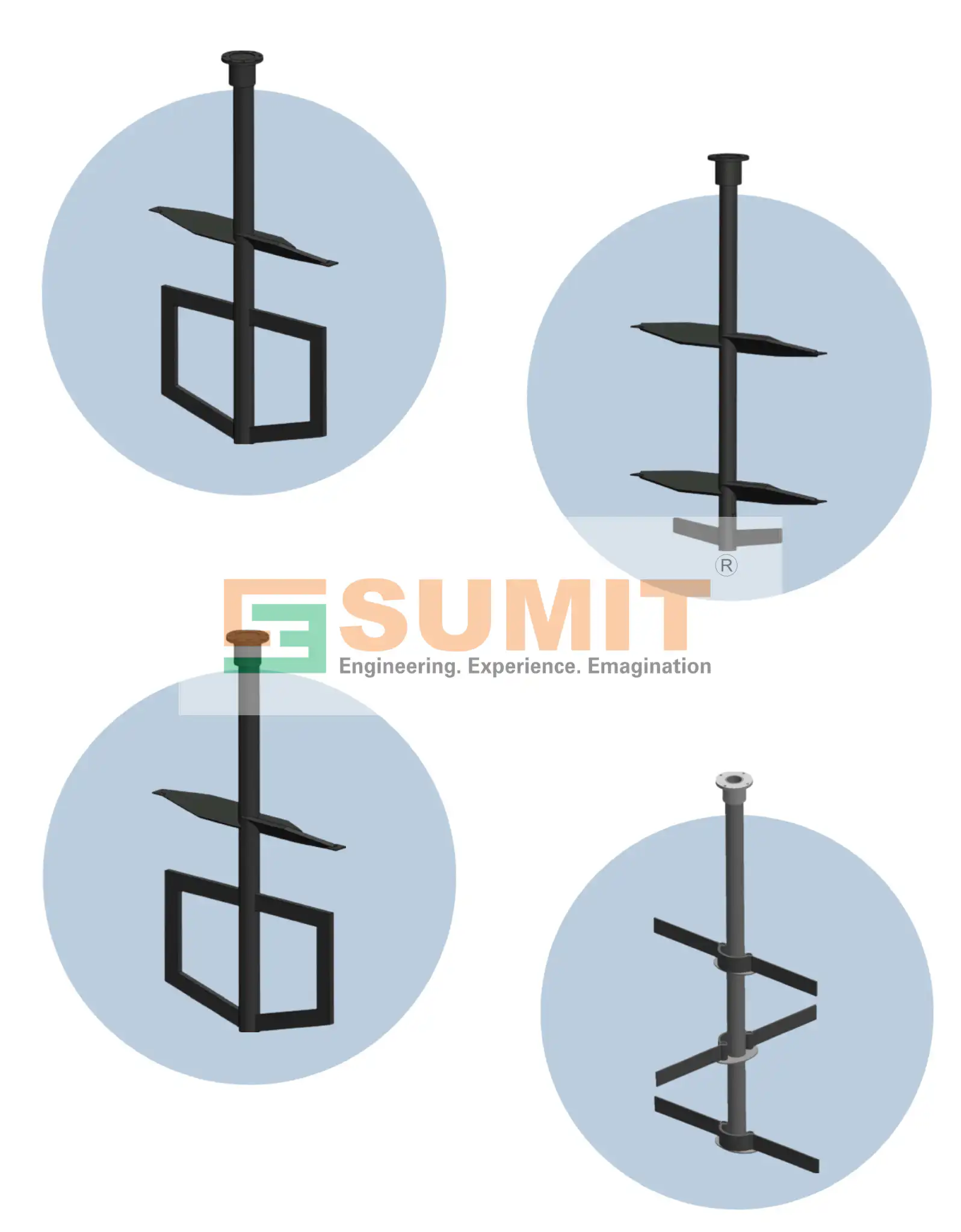
Types of Industrial Stirrers and Mixers
There are many different types of industrial mixing equipment to suit different applications.
Top entry mixers: These are installed at the top of a tank and are generally employed for blending liquids, chemical preparation and for general industrial mixing.
High-speed dispersers: Designed for applications that require effective dispersion of powders or pigments into liquids, these systems are often used in paint, ink, and coating production.
Low speed agitators: These agitators can be employed for some high viscosity materials and applications where gentle blending and suspension are needed.
Specialized process mixers: For certain applications, the mixing performance can only be obtained with a special impeller, a special shaft or drive system.
The appropriate design depends on the material properties, vessel configuration, and intended process outcome.
Key Factors to Consider When Selecting a Manufacturer
Choosing equipment involves more than comparing prices. A trusted supplier will be familiar with the technical specifications of the application and assist with the selection of an appropriate configuration.
When choosing an Industrial Stirrers Mixer Manufacturer, take into account the following points:
1. Engineering and customization
Manufacturer should be able to determine the dimensions of the tank, characteristics of the liquids, the purpose of the mixing and the tank installation. Depending on the application, it may be necessary to have different lengths of shafts, different types of impellers, and different mounting configurations.
2. Material compatibility
Shafts, impellers and wetted components should be made with material which is suitable for the substance being mixed. Depending on the corrosion resistance, sterilization and operating conditions, stainless steel or other appropriate materials can be chosen.
The selection of motors and gearboxes.
3. Choice of motors and gearboxes.
It all depends on the capacity of the motor and the speed at which it operates along with the torque of the gearbox. Sizing helps achieve stable performance and reduce energy wastage.
4. Manufacture Quality
One should look at the quality of construction, the fit of parts, finishing, and even the provision of technical specifications. Installation and maintenance instructions are also important.
5. Post-sales service
To achieve maximum production efficiency during the entire lifetime of the machinery, technical services, spare parts supply, and maintenance services can help to minimize downtime.
Applications Across Different Industries
Industrial stirrer mixer can be used in any place where material should be mixed or kept in a same condition.
- Chemical processing: Blending chemical solutions, additives and process liquids.
- Pharmaceutical manufacturing: Making solutions and supporting appropriate liquid processing operations.
- Paints and coatings: Dispersing pigments and mixing formulation ingredients.
- Mixing treatment chemicals and uniform distribution in treatment tanks.
- Food and beverage processing: Mixing suitable ingredients in accordance with guidelines regarding hygiene.
- Every application requires specific operating needs and suitable equipment is essential.
Why the Right Mixing Partner Matters
Businesses can also benefit from consulting with an experienced Industrial Stirrers Mixer Manufacturer to help them identify the equipment that will best suit their production needs. The appropriately chosen mixing system enables uniform processing, efficient material handling, and facilitates the integration in the existing industrial system.
Discuss material characteristics, batch quantity, operation rate, system setup, and quantity of units to be manufactured with the supplier prior to finalizing the supplier. Providing the manufacturer with accurate process data would make sure that the supplier is able to provide a recommendation without any assumptions.
Frequently Asked Questions
It is applied for blending liquids, dissolving materials, dispersing solids and uniformity in industrial processes.
Industrial Mixers can be applied in chemical, pharmaceutical, paints, water treatment, food processing, and other manufacturing industries.
It is important to take into account the following factors: tank volume, substance viscosity, batch size, mixing time, and the end process result.
It is dependent on the compatibility of chemicals and operating environment.
Yes. This is because it is possible to design an industrial mixer depending on the specific application, that is, the shaft length, impeller type, motor power, among others.
Conclusion
The selection of the appropriate industrial stirrer or mixer demands the knowledge of the property of the material to be stirred or mixed, process needs, equipment design and working conditions. Impeller configuration, motor size, material compatibility and maintenance facilities are all factors in the reliability of mixing performance.
Careful evaluation of technical requirements should be made and a manufacturer should be chosen who can suggest an appropriate configuration of equipment. See how SumitSpiral can provide an industrial equipment solution to your mixing needs at sumitspiral.com.